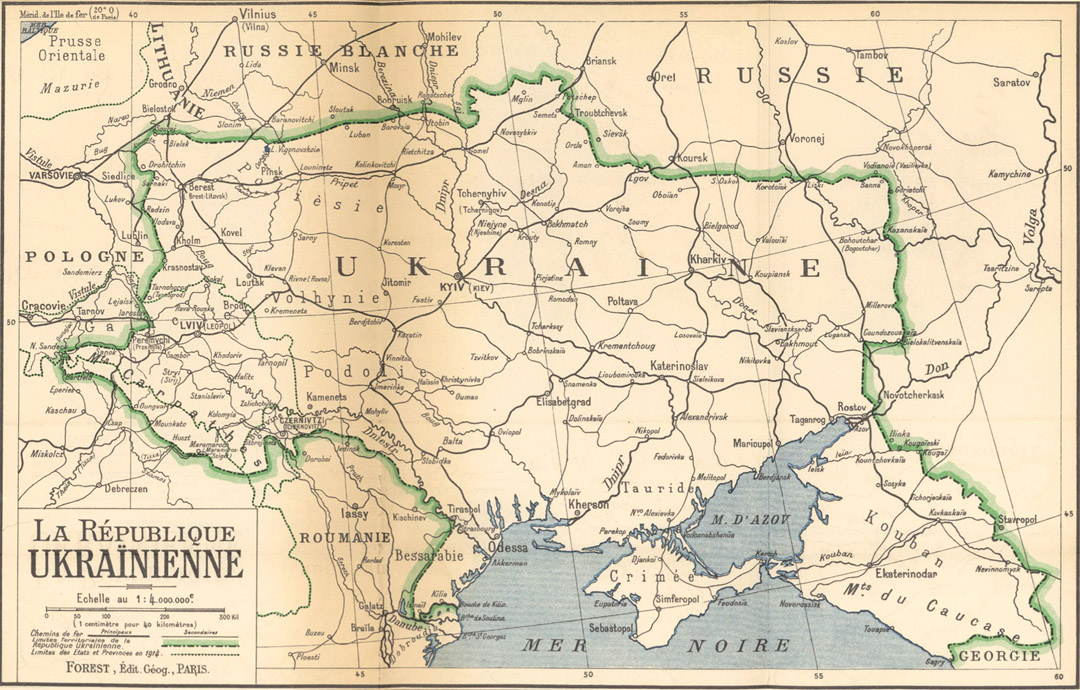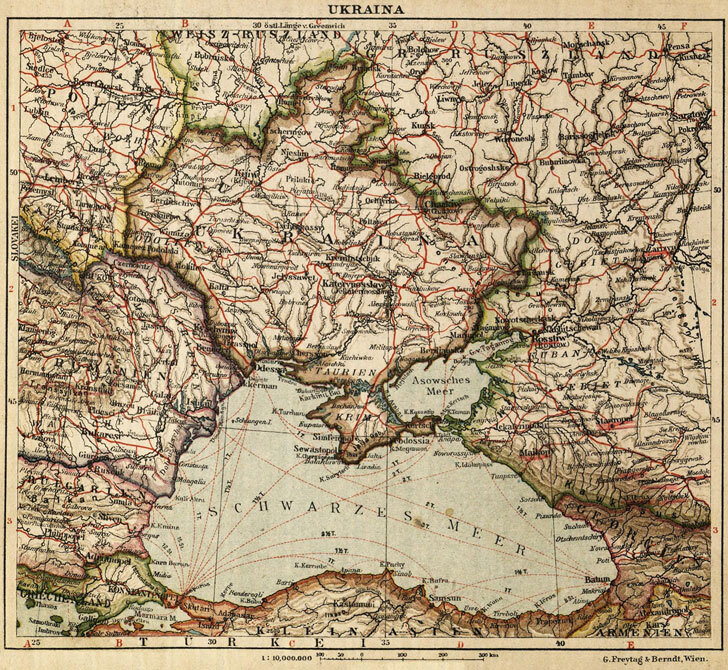
The Ukrainian delegation to the Paris Peace Conference presented its territorial claims through a comprehensive memorandum that articulated both the historical foundations and contemporary justifications for an independent Ukrainian state. This document, submitted to the Allied powers in February 1919, outlined boundaries designed to unite Ukrainian ethnic territories while ensuring economic viability and strategic security.
The memorandum proposed borders encompassing approximately 850,000 square kilometers with a population of roughly 35 million, of whom the Ukrainian delegation claimed 70-75% were ethnically Ukrainian. The western boundary extended along the Carpathian Mountains, incorporating the Lemko and Hutsul regions. In Eastern Galicia, the proposed line placed Lviv firmly within Ukrainian territory, running westward to exclude predominantly Polish-inhabited areas around Przemyśl.
Northward, the memorandum claimed territories extending into Polesia and parts of Volhynia, regions where Ukrainian peasant populations predominated despite Polish landowning elites. The delegation emphasized the principle of ethnic self-determination, arguing that the rural Ukrainian majority's wishes should prevail over urban Polish minorities concentrated in administrative centers.
The eastern frontier proved most ambitious and contentious. The memorandum extended Ukrainian claims to the Don River region, incorporating substantial territories where Ukrainian settlement blended with Russian populations. The delegation justified these boundaries by citing historical Cossack territories, linguistic surveys, and agricultural settlement patterns. The industrial Donbas, despite its ethnically mixed character, was claimed as economically essential to Ukrainian state viability.
Southward, the memorandum asserted Ukrainian sovereignty over the entire northern Black Sea coast, including Crimea. The delegation argued that Crimea's integration was necessary for maritime access and economic development, downplaying the peninsula's Tatar heritage and Russian demographic majority by emphasizing recent Ukrainian colonization.
The memorandum supported these territorial claims with ethnographic maps, population statistics, and historical arguments tracing Ukrainian national development from Kyivan Rus through the Cossack era. It emphasized Ukraine's agricultural wealth—positioning the country as Europe's potential breadbasket—and its strategic importance as a buffer against Bolshevism.
However, the document revealed inherent contradictions. While invoking Wilsonian self-determination principles, the proposed boundaries included significant non-Ukrainian minorities: Russians, Poles, Jews, Germans, and Romanians. These demographic realities, combined with Ukraine's domestic political instability and the Allies' competing strategic priorities, ultimately undermined the memorandum's effectiveness. The territorial vision articulated at Paris remained unrealized, as geopolitical forces redrew Eastern Europe's boundaries with little regard for Ukrainian aspirations.